

Haneda Airport (HND), previously known as Tokyo International Airport is Japan's busiest airport in terms of passenger traffic. It is often referred to as Tokyo-Haneda to distinguish it from the megalopolis’s other big international airport - Tokyo-Narita.
Tokyo-Haneda is located 15 kilometers south of Tokyo Station. It serves as a major hub for domestic and international flights.
In 2024, Haneda Airport served over 85 million passengers, ranking as the second busiest in Asia (only after Dubai International DXB) and the third busiest in the world after Atlanta’s Hartsfield-Jackson (ATL).

Major Airlines - Japan Airlines, All Nippon Airways, Air Do, Skymark Airlines
Haneda Airport is a hub for two major Japanese Airlines:
Japan Airlines (JAL): Japan’s national carrier operates domestic flights from Terminal 1 and international flights from Terminal 3.
All Nippon Airways (ANA): Japan’s largest airline serves both domestic and international routes, primarily from Terminal 2.
Four other smaller regional Japanese airlines use Haneda Airport as an operating base:
Skymark Airlines: A low-cost turned premium airline that provides domestic services from Terminal 1.
Solaseed Air: A regional airline offering flights between Haneda and destinations across Kyushu Island.
StarFlyer: A low-cost+ airline with domestic flights from Terminal 2.
Air Do: A Sapporo-headquartered airline that flies between Haneda and destinations in Hokkaido.
Many of the big international airlines have scheduled flights at Haneda Airport. Some of the notable ones include American Airlines, British Airways, Cathay Pacific, Singapore Airlines, and Turkish Airlines.
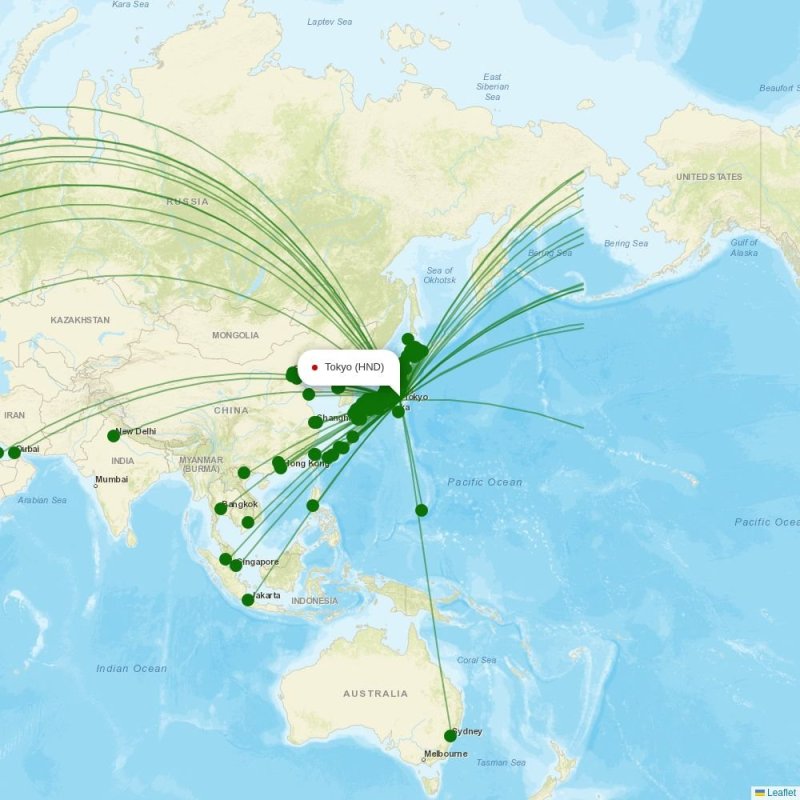
Haneda Airport is connected by direct flights to all but one of the world’s populated continents (except South America).
See all airlines that fly to and from Haneda Airport.

Terminal Layout and Gates at Haneda Airport
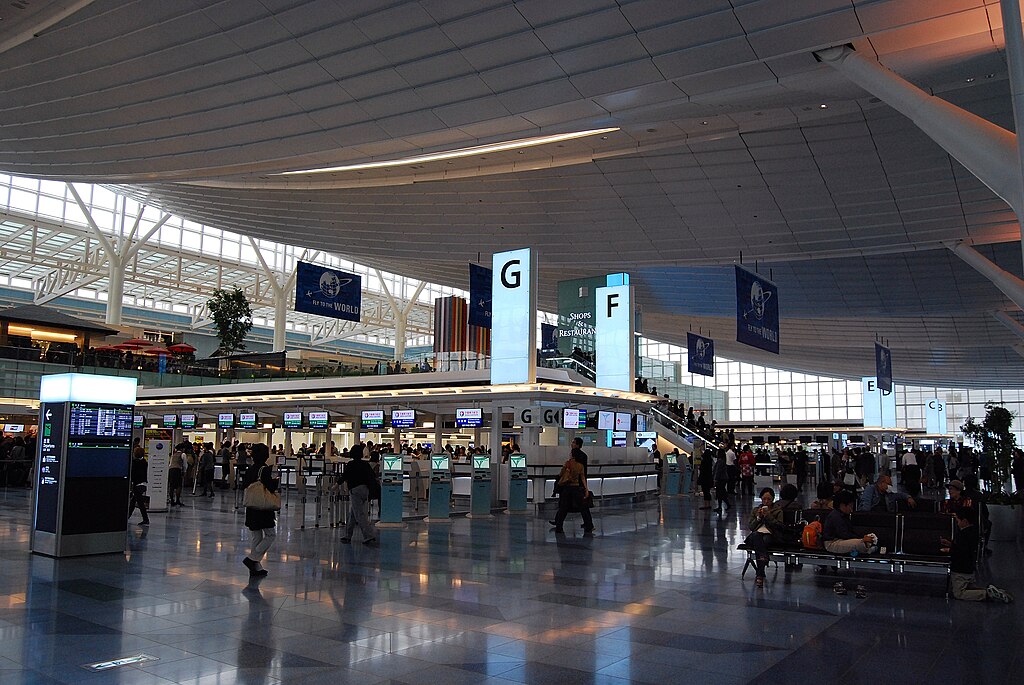
Haneda Airport comprises three main terminals:
Terminal 1 (nicknamed "Big Bird"): This is the largest terminal, featuring a six-story restaurant and shopping area, conference rooms, and a rooftop observation deck. It primarily serves Japan Airlines, Japan Transocean Air, J-Air, and Skymark Airlines and is used only for domestic flights. Terminal 1 has 23 gates.
Terminal 2: This terminal caters to All Nippon Airways, Air Do, Solaseed Air, and StarFlyer. It serves mostly domestic flights but has also been accommodating the international flights of All Nippon Airways since 2023. Terminal 2 has 27 gates.
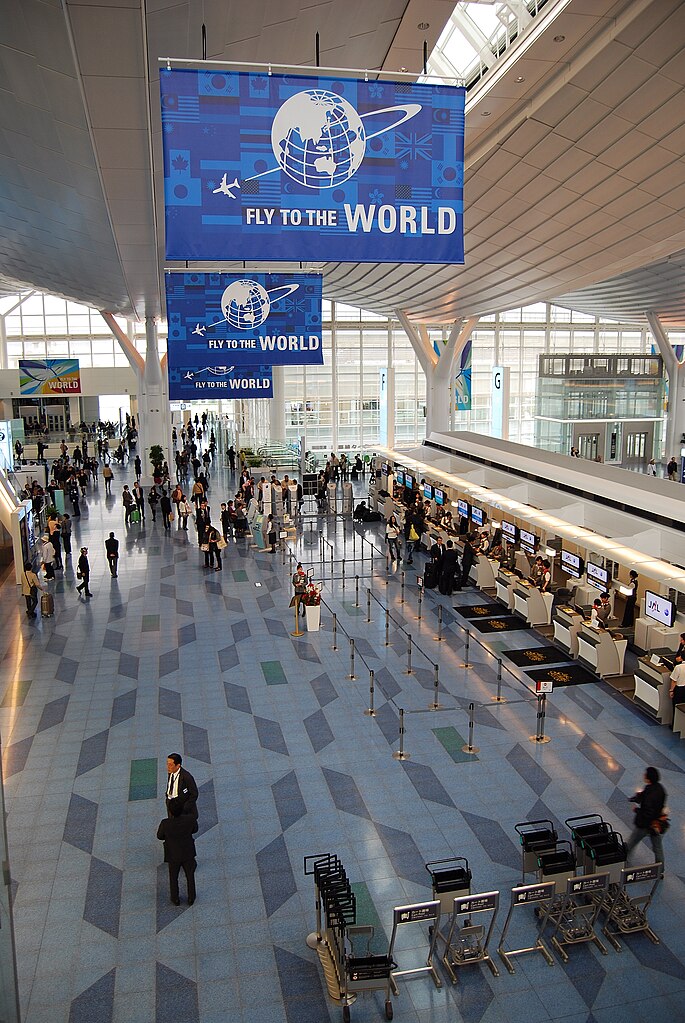
Terminal 3: This is the newest terminal and was formerly known as the International Terminal. For a reason - most of the airport’s international flights use Terminal 3. The terminal has multiple VIP lounges and 20 gates.
Terminals 1 and 2 are connected underground, and a shuttle bus operates every five minutes between all three terminals.
Check out all the destinations you can go to from Haneda Airport.
Connecting Flights and Transit
It’s relatively easy to transit at Haneda Airport. The terminals are connected both airside and landside, so you don’t need to enter Japan unless you want to.
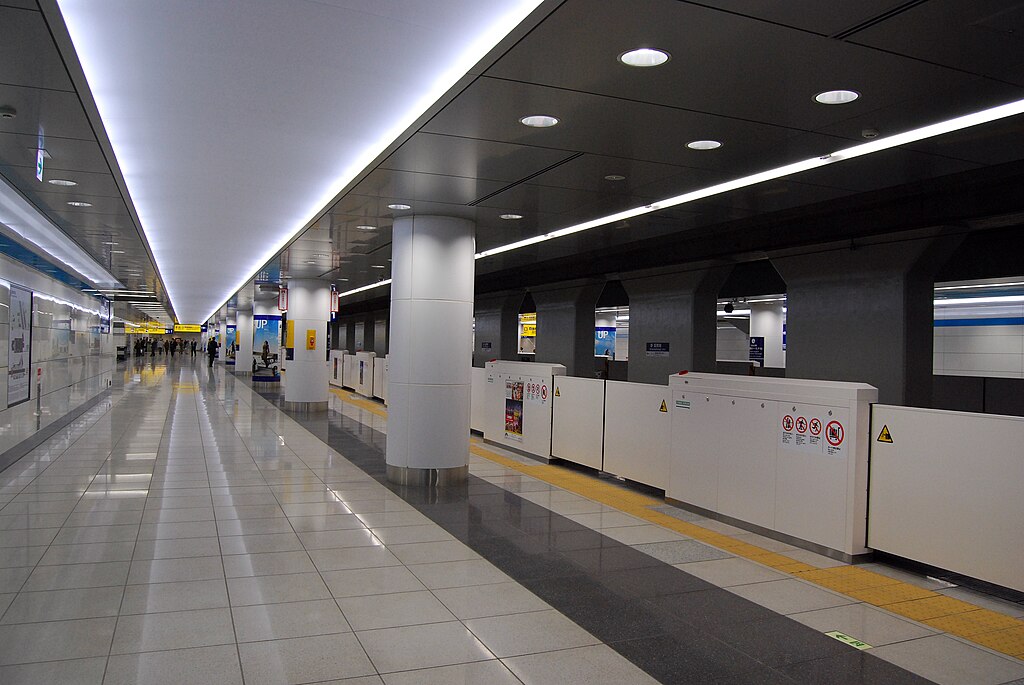
Terminals 1 and 2 are connected via an underground passage. A free shuttle bus operates between all terminals every five minutes. This bus runs airside and does not require clearing Immigration.
Other means of travel between the terminals are the Keikyu Line or the Tokyo Monorail but both are located landside (i.e. after Security) and you must officially enter Japan to use them. As a transit passenger, you are entitled to a free Transit Boarding Ticket for either of these trains - ask at Information for this perk.
If you’re transiting with 2 flights at the same terminal, just follow the signs for "International Transit". Otherwise, travel to the new terminal and then go to the “International transit security checkpoint”.
Wi-Fi at Haneda Airport
Complimentary Wi-Fi is available throughout Haneda Airport. To access the internet, connect to the "HANEDA-FREE-WIFI" network and follow the on-screen instructions.
Dining Options at HND
As a massive international airport, Tokyo-Haneda has no shortage of restaurants, bars, and fast-food outlets.
While there are too many to list them all, here is a short selection of good places to eat at:
Edo Market: Located in Terminal 3, this area replicates traditional Edo-period streets ( lined with various Japanese restaurants and eateries.
International Gourmet Zone: Also in Terminal 3, this is the place to go for a selection of diverse international cuisines all in one place.
Koganeiro No Buta in Terminal 1 for delectable Japanese food.
Matsumoto Coffee Ten is in the north wing of T1. This full-scale coffee shop prides itself on freshly brewed coffee.
Soba Kappo Azumino: Located in T2, near Gate 5F, this is the best soba noodle place at the airport.
Komeraku in T2, near gate 3F, for Japanese cuisine with a homely feel.
Fun things to do at Haneda Airport
In Terminal 3, go to the Edo Alley (Edo Market) - a shopping and dining area that transports you back to the Edo period with the decor and ambiance as what it would’ve been over 2 centuries ago. On the way there, make a stop at the Haneda Nihonbashi Bridge replica between floors 4 and 5.
In Terminal 1, look for the aviation shrine and pray to the Shinto gods and spirits for a safe flight. Find it on the first floor.
For a more modern Japan, visit Tokyo Pop Town on the fifth floor of Terminal 3. It stocks an array of anime, manga, and character merchandise. You can also rent a "Robohon" to guide you around.
The Observation Deck at Terminal 2 is a lovely place to make some final memories of the airplanes taking off and landing before you depart Japan.
Lounges at Haneda Airport
Every terminal of Tokyo-Haneda has at least 2 premium lounges. They are either open-access for anyone who pays the entrance fee or airline-specific for travelers of particular airlines.
Terminal 1 has the JAL Sakura Lounge which offers premium facilities for Japan Airlines passengers. The open-access lounge is Power Lounge which costs just 1100 JPY (~7$) to enter but has a limited choice when it comes to food and drinks.
In Terminal 2, the ANA Lounge stands out. It is open to VIP All Nippon Airways travelers and offers a stylish area to relax in plus a self-serve bar. In T2 there is also a Power Lounge and an Airport Lounge for regular passengers.
When it comes to Terminal 3, you have the most lounges to choose from. There are lounges for Japan Airlines, All Nippon Airways, Cathay Pacific, and Delta Airlines. If you have a premium flier status with one of those airlines or their partners, check with the airline for details. Open-access lounges in T3 include the Sky Lounge and TIAT Lounge.
Transportation
Haneda Airport is less than an hour from most of Tokyo’s biggest neighborhoods. Its location in Ota city is convenient and the distance of just 15 km to the heart of Tokyo is short for the city’s humongous size. Haneda Airport is also well-connected with a variety of transportation options.
- Rail Services:
The Keikyu Airport Line picks up passengers from each terminal before leaving for Shinagawa Station on the JR Yamanote Line.
The Tokyo Monorail provides direct connections to central Tokyo including Hamamatsucho close to Tokyo Station.
These 2 lines stop at many other places of interest along the way. If you have a JAPAN RAIL PASS, you can use it to cover your fares on these JR lines.
Bus Services: Various routes go to a multitude of places across Japan. Purchase a ticket using the bus ticket machine at each terminal. At T3 there is a bus ticket counter with multilingual staff who can help you with directions and bus information.
Taxis: Available at designated stands outside each terminal. A trip to Tokyo Station will cost around 7000-8000 JPY (~45-50 USD).
You can easily get to other cities in the Greater Tokyo Area, such as Yokohama and Chiba, using either trains, buses, or private transport.
Check out private transfer options from Haneda Airport.
Haneda Airport to Narita Airport
Tokyo’s two big airports are connected via the direct Airport Limousine Bus service.
You can also travel between the two by train - an express service called Airport Kaitoku departs from Haneda Airport every 40 minutes.
Of course, the taxi option is always there, but the distance between HND and NRT is about 80 km, so this trip will cost in the order of 25000 JPY (~170 USD)
Parking at Haneda Airport
There are 5 parking lots at Haneda Airport with standardized rates. It is important to check the real-time congestion information because queues for car parks can be ludicrous and last a few hours, thus making you miss your flight.
P1, P2, and P3 are indoor parking lots and do not allow large vehicles. P4 and P5 are outdoors.
The first 30 minutes of parking at any lot are free of charge. The first 60 minutes are charged at 300 JPY and every 30 minutes thereafter cost 150 JPY. The maximum daily rate depends on the parking lot and is between 1530 and 2140 JPY.
Reserve your slot beforehand to get the best deals and guarantee your parking spot.

Hotels near Haneda Airport
Two hotels are located within the airport making for a good place to stay during a layover or before an early morning flight:
Haneda Excel Hotel Tokyu: Situated in Terminal 2 with direct access to the departure hall.
Royal Park Hotel Tokyo Haneda: Located in Terminal 3.
First Cabin Haneda offers compact pods reminiscent of the first-class cabin on some airlines. Find it in T1.
Around the airport, you can stay at:
Keikyu Ex Inn Haneda
Hotel MyStays Haneda
Hotel JAL City Haneda Tokyo
All of those hotels offer complimentary shuttle service to and from your terminal.
There are of course many more hotels near Haneda Airport. Discover more hotels here.
 Tokyo, Japan